Python String Functions Cheat Sheet
Python String Functions Cheat Sheet - Web finally, count()lets you know how many times a certain character appears in the string. Isupper () returns true if all characters in the string are upper case. 1 >>> {0} is a lot of {1}.format(python, fun!) 2 'python is a lot of fun!' 6 Join () converts the elements of an iterable into a string. Isalnum () returns true if the string consists only of letters and numbers. The concatenation of the ascii_lowercase and ascii_uppercase constants described below. Isalpha () returns true if the string consists only of letters. Indexing with negative numbers counts from the end of the string. Web returns true if all characters in the string are whitespaces. Web python strings can be indexed using the same notation as lists, since strings are lists of characters.
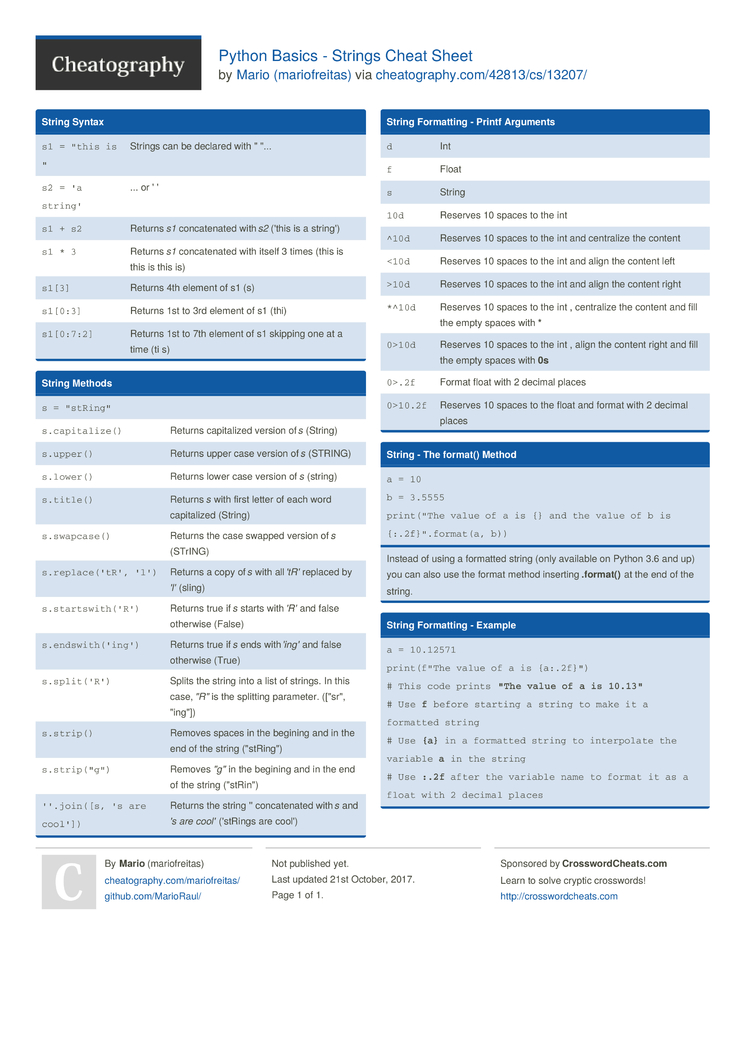
Python Basics Strings Cheat Sheet by mariofreitas Download free

Python date & time conversion CheatSheet DEV Community
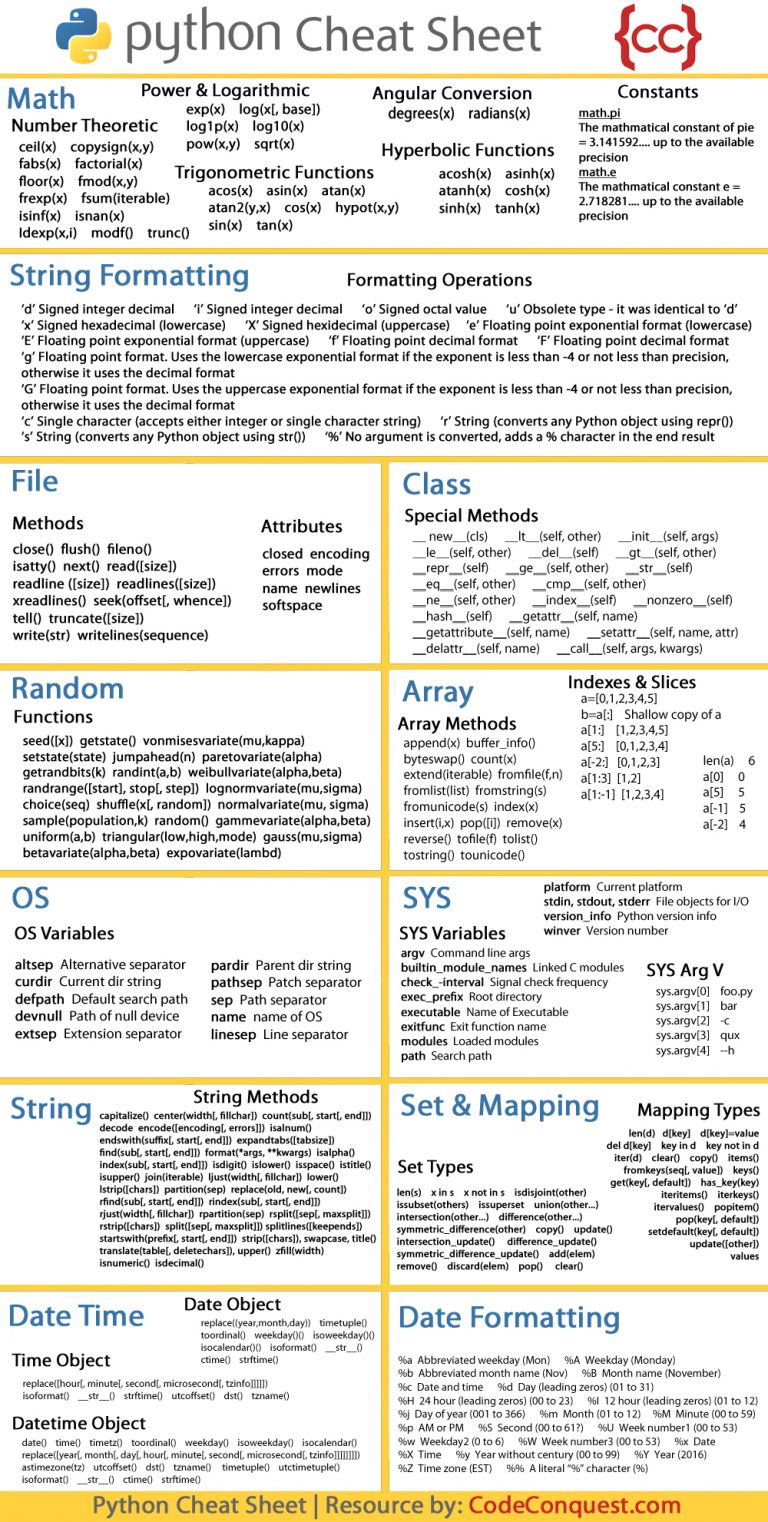
Python Coding Cheat Sheet Code Conquest
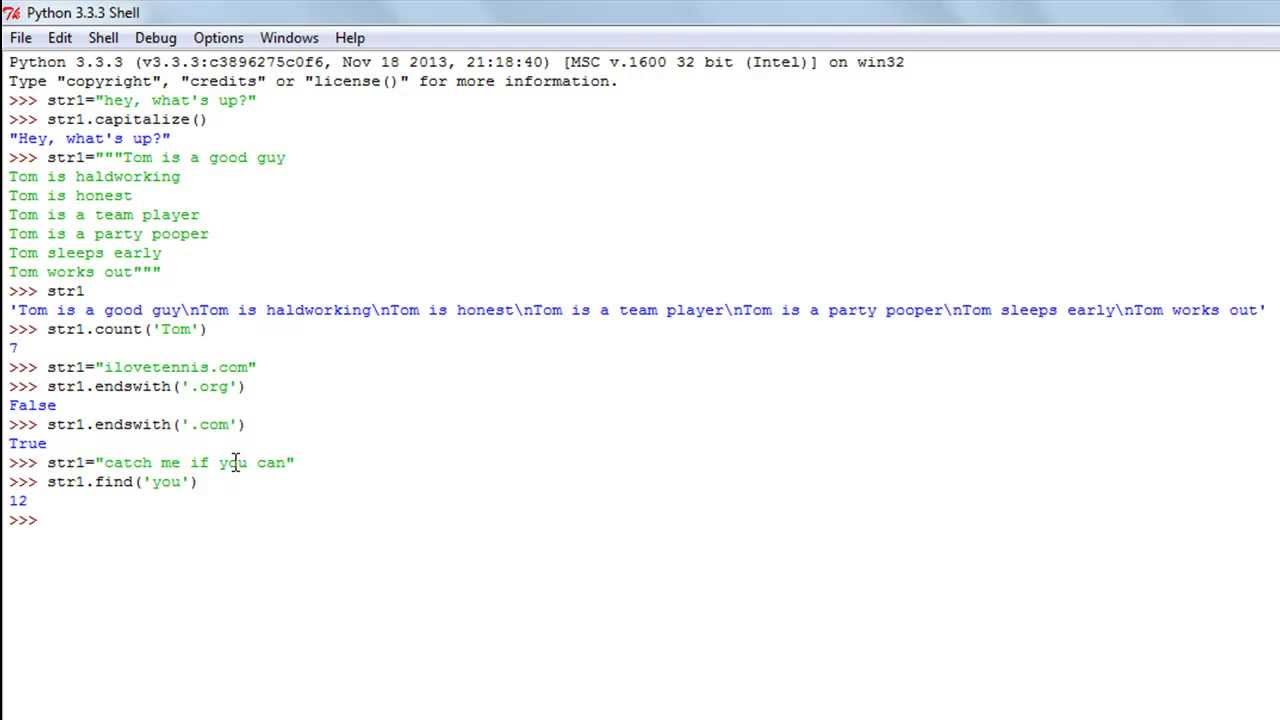
Python Programming Tutorial 26 String Functions (Part1) YouTube
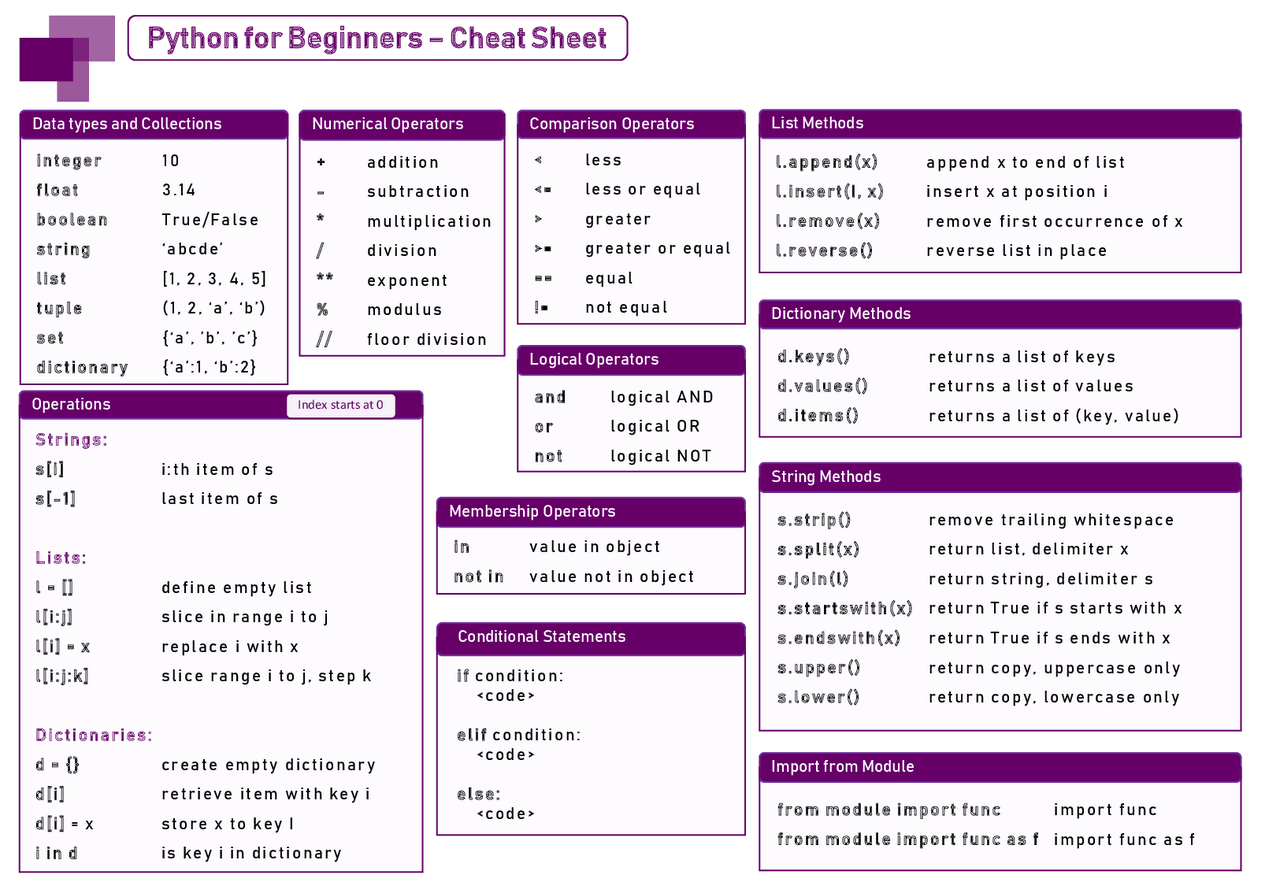
Python for Beginners Cheat Sheet Cheat Sheet Advanced Computer

Python Strings Cheat Sheet Lana Caldarevic Medium
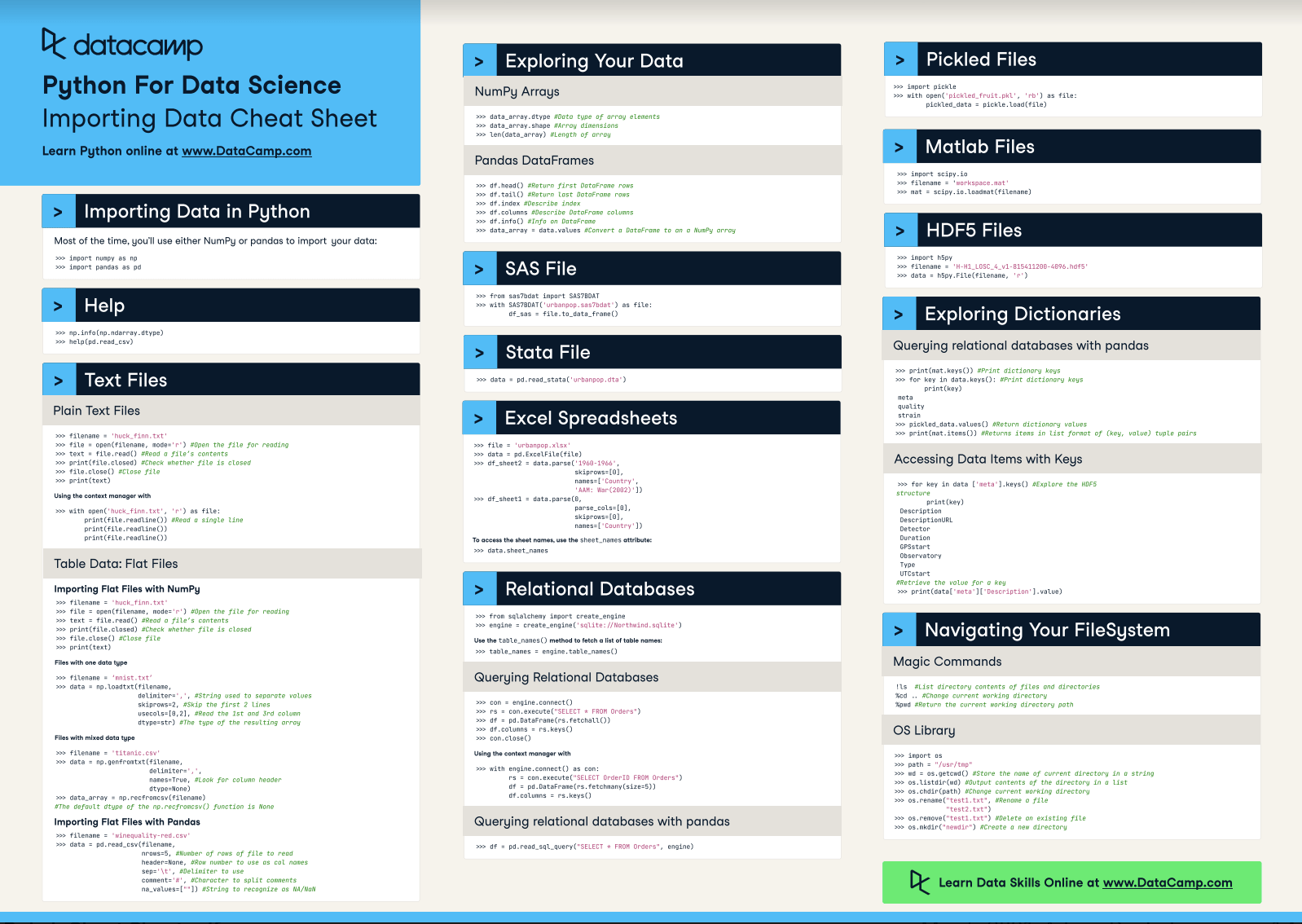
Importing Data in Python Cheat Sheet DataCamp
![[Collection] 11 Python Cheat Sheets Every Python Coder Must Own Be on](https://blog.finxter.com/wp-content/uploads/2019/03/CheatSheet-Python-5-Functions-and-Tricks.jpg)
[Collection] 11 Python Cheat Sheets Every Python Coder Must Own Be on

Pin on Cheat Sheets
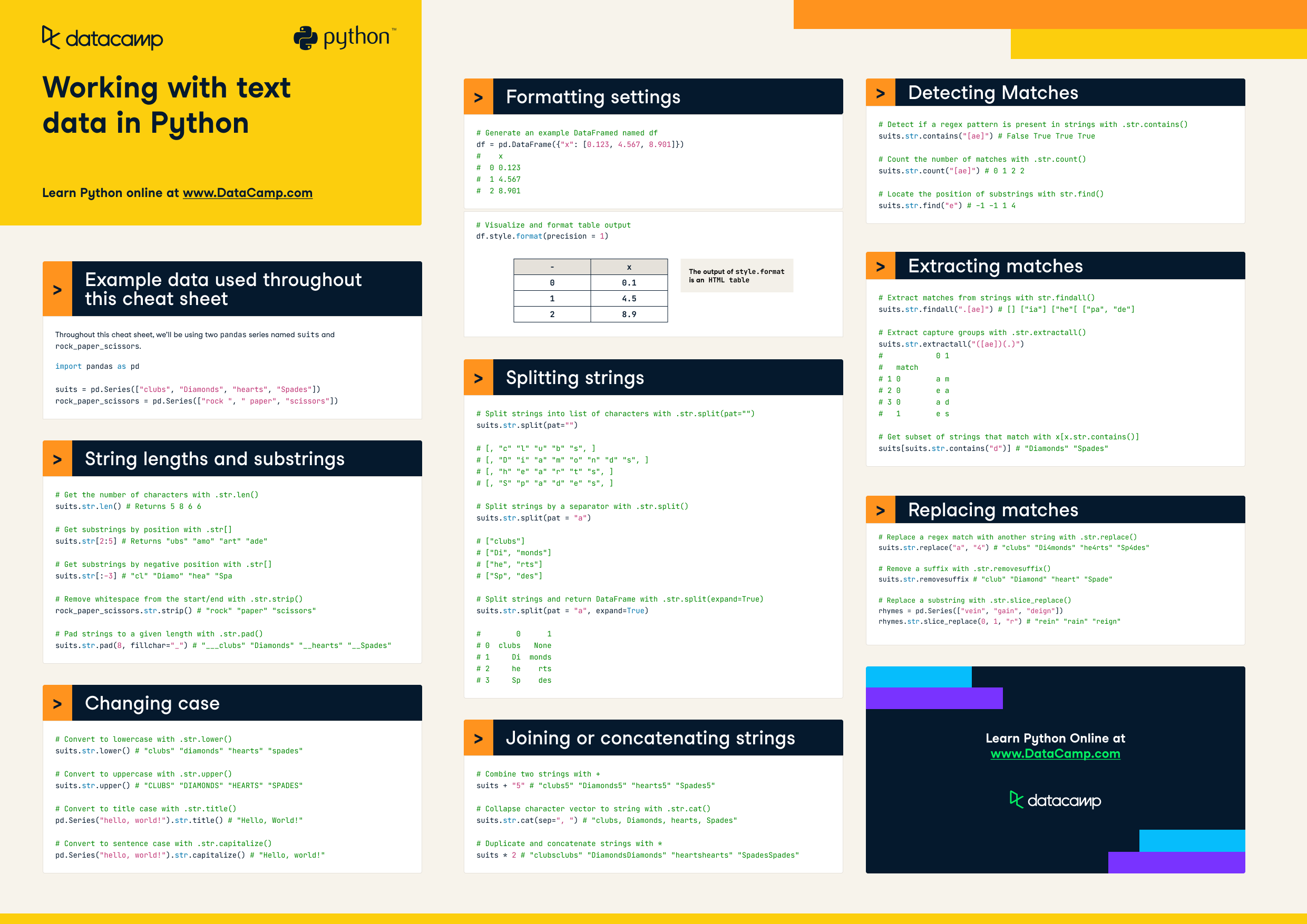
Text Data In Python Cheat Sheet DataCamp
Indexing With Negative Numbers Counts From The End Of The String.
Isdecimal () returns true if the string consists only of numbers. Web python strings can be indexed using the same notation as lists, since strings are lists of characters. Join () converts the elements of an iterable into a string. The constants defined in this module are:
Isupper () Returns True If All Characters In The String Are Upper Case.
A single character can be accessed with bracket notation ( [index] ), or a substring can be accessed using slicing ( [start:end] ). The concatenation of the ascii_lowercase and ascii_uppercase constants described below. Web returns true if all characters in the string are whitespaces. Web text sequence type — str.
1 >>> {0} Is A Lot Of {1}.Format(Python, Fun!) 2 'Python Is A Lot Of Fun!' 6
1 >>> number_list =['one', 'two', 'one', 'two', 'two'] 2 >>> number_list.count('two') 3 3 you can also format/create strings with the format()method. Web finally, count()lets you know how many times a certain character appears in the string. Isalnum () returns true if the string consists only of letters and numbers. Istitle () returns true if the string follows the rules of a title.
Isalpha () Returns True If The String Consists Only Of Letters.
Ljust () returns a left justified version of the string.