Tar Cheat Sheet
Tar Cheat Sheet - Web a pdf document that summarizes the usage, options and examples of gnu tar, an archiving program that allows you to store and manipulate multiple files in a single file. The main syntax for the “tar” commands looks like this: Deflate / inflate / concatenate. Not only that, it will also show some advanced options that will let you peek into the internals of an archive. Options are used to tell tar exactly what to do with the archive.</p> Learn how to create, list, extract, append, delete and compress archives with tar. Web this cheatsheet will show you the commands in gnu tar that you can use to manipulate tar files in linux. Tar <<strong>options</strong>> we’ll see different examples in the following article that will make everything more clear, but in short:
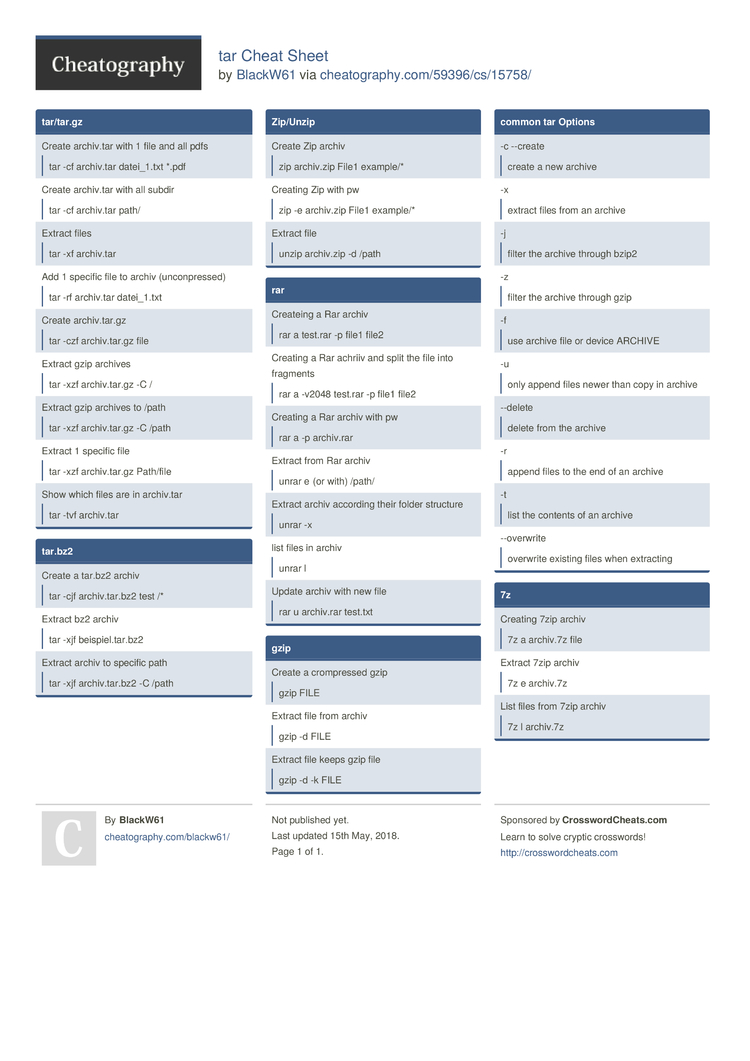
tar Cheat Sheet by BlackW61 Download free from Cheatography

Digital tarot cheat sheet with tarot card meanings for tarot beginners
The Tar Command Cheat Sheet Free Cheat Sheet

Tarot Cheat Sheet Tarot Guide 28 Pages PDF With Layouts Etsy Canada

Common GNU Tar Commands Cheatsheet Make Tech Easier

The Tar Command Cheat Sheet Free Cheat Sheet Vrogue

6 Best Linux/Unix Command Cheat Sheet Linux, Coding tutorials, Cheat
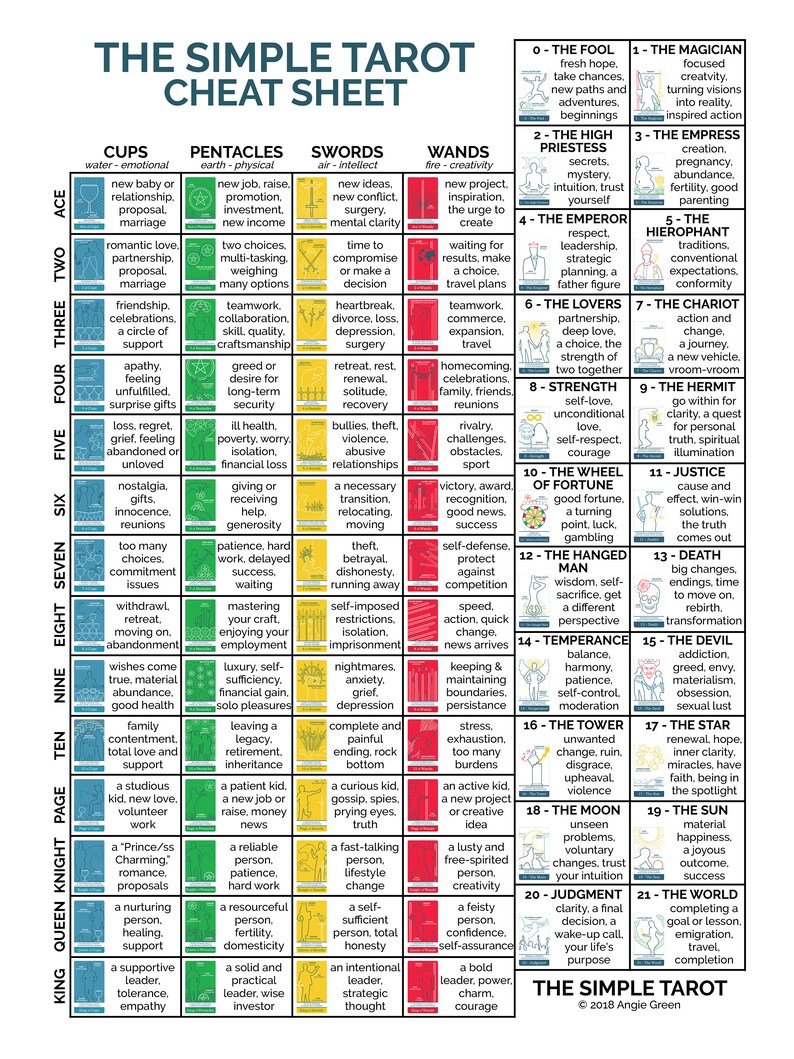
The Simple Tarot Cheat Sheet Poster Etsy

Tar Command Cheat Sheet BearlyChilly

tar Cheat Sheet Quick Reference Guide
Options Are Used To Tell Tar Exactly What To Do With The Archive.</P>
Web this cheatsheet will show you the commands in gnu tar that you can use to manipulate tar files in linux. Not only that, it will also show some advanced options that will let you peek into the internals of an archive. Web a pdf document that summarizes the usage, options and examples of gnu tar, an archiving program that allows you to store and manipulate multiple files in a single file. The main syntax for the “tar” commands looks like this:
Learn How To Create, List, Extract, Append, Delete And Compress Archives With Tar.
Deflate / inflate / concatenate. Tar <options> we’ll see different examples in the following article that will make everything more clear, but in short: